Silly: A Playful Display Font for Bold Creative Fonts
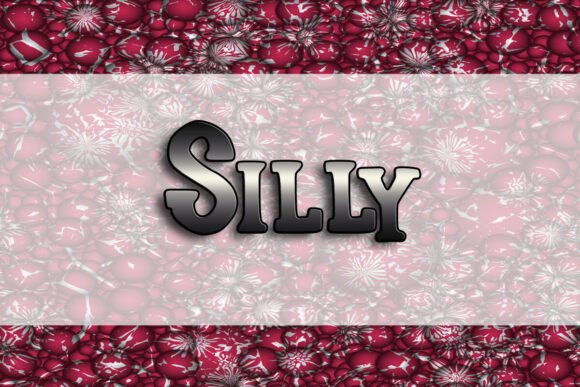
I recently pulled Silly from my library while prepping a visual concept for a new client—a boutique handmade soap brand looking to break away from the minimalist, sterile aesthetic that dominates their niche. They wanted something that felt approachable, fun, and distinctly human. My first impression upon opening the file was immediate: this typeface has personality in spades. It doesn't just sit on the page; it bounces. The letterforms are irregular yet balanced, creating a mood that is undeniably cheerful without tipping over into illegibility. For a designer, finding a display font that manages to be quirky but still functional for commercial work is often a hunt, but Silly feels like a strong contender for projects requiring an emotional hook.
Setting the Mood for Handmade Business Branding
In the context of small business branding, the typography you choose does heavy lifting. It tells the customer who you are before they read a single word of your copy. Silly exudes a sense of whimsy that fits perfectly with creative marketplaces like Etsy or local craft fairs. When I dropped the font into a logo concept for the soap brand, it instantly softened the overall identity. It suggests that the products inside the packaging are crafted with care and a sense of joy, rather than mass-produced in a factory. This emotional appeal is crucial for audience engagement, especially when targeting demographics that value authenticity and creativity over corporate polish.
The style represents a modern take on hand-lettered aesthetics. It avoids the overly perfect curves of vector-based script fonts, opting instead for a slightly rougher, more organic edge. This makes it an excellent graphic design asset for anyone trying to convey a "made by hand" narrative. Whether you are designing product labels, packaging design elements, or thank-you cards included in shipments, Silly adds that layer of irresistible charm that helps a brand feel personal and inviting.
Real-World Application in Marketing Visuals and Merch
Taking this font beyond the logo, I tested its versatility across various marketing visuals. For social media graphics, specifically Instagram posts and Pinterest pins, Silly shines as a hero element. Its bold strokes grab attention in a crowded feed, making it ideal for announcing sales, new drops, or seasonal campaigns. I also mocked up a few t-shirt designs and sticker sheets, which are staples for print-on-demand sellers. The font's thick lines hold up well even when cut into complex shapes for vinyl cutting machines, making it a reliable choice for Cricut projects and sublimation design workflows.
For digital sellers creating Canva templates or printable wall art, Silly offers a unique selling point. Most templates rely on the same five safe sans-serif fonts; introducing a characterful display font can make a template stand out in a creative marketplace. I envision this working beautifully on tote bags, mugs, and editorial design headers where the goal is to make the reader smile. It transforms a standard product mockup into something that feels curated and special. When used in web design for landing pages or blog visuals, it acts as a fantastic accent to break up long blocks of body text, guiding the eye and adding visual interest.
Strategic Placement and Visual Hierarchy
However, professional judgment requires knowing not just where to use a font, but where to hold back. Silly is a display font, and like all strong personalities, it demands space. It works best in large layout areas, such as hero graphics on websites, main headlines on flyers, or central text on posters. In these scenarios, it establishes a clear visual hierarchy, signaling to the viewer exactly what is most important.
Conversely, you must use this asset carefully in small sizes or crowded layouts. Because of its playful irregularities, readability can suffer if the font is scaled down too far for body copy or fine print on packaging details. It is not suitable for minimalist branding that relies on ultra-clean lines, nor should it be used for professional corporate materials like legal documents or financial reports where visual trust and neutrality are paramount. On complex backgrounds or low-contrast designs, the unique shapes of the letters might get lost, so always ensure there is enough breathing room and contrast between the text and the background.
Designer Notes: Testing for Commercial Viability
Before finalizing any asset for a real client project, I run a strict checklist to ensure quality and usability. Here is how I evaluated Silly:
- Contrast Testing: I tested the font in pure black against white, and vice versa, to ensure the strokes remain distinct. I also checked it against colored backgrounds typical of the client's brand palette to guarantee legibility.
- Size Scalability: I previewed the font at 12pt, 48pt, and 200pt. While it excels as a headline, I confirmed it becomes muddy below a certain threshold, reinforcing its role as a display-only tool.
- Mockup Integration: I placed the text onto realistic product mockups, including t-shirts and ceramic mugs, to see how the curves interact with physical contours. The results were promising, maintaining its shape without distortion.
- File Format Inspection: I reviewed the included files. If you are working with SVG design or PNG design assets derived from this font, check the transparency and vector editability. Ensure the paths are clean for cutting machines if you are producing physical goods.
- Style Comparison: I compared Silly against standard serif, sans serif, and handwritten options. It holds its own as a unique display font that offers more character than a standard script but more structure than a chaotic brush font.
- Licensing Verification: Crucially, I confirmed the commercial license terms. Since this is for a client's business, ensuring the license covers merchandise, digital products, and broad commercial use is non-negotiable.
Ultimately, Silly is a versatile typography tool that breathes new life into creative endeavors when used with intention. It is not a catch-all solution, but for the right project—specifically those involving handmade businesses, seasonal campaigns, or brands wanting to inject fun into their identity—it is an invaluable resource. By understanding its strengths in large-scale applications and respecting its limitations in small text, designers can leverage Silly to create memorable, engaging, and polished design assets that resonate with audiences.